Five frameworks that hold under AI workforce change.
The Signs Framework™ activates the posture. Four strategic frameworks turn what the executive sees into organizational action. The sequence matters. Running the frameworks out of order produces weaker output. Skipping any of them produces a partial diagnosis.
1posture framework, the Signs™4strategy frameworks in sequence10living signs, read on real ground
Why the method exists
Most strategy frameworks assume clear signals and ask how to execute. AI workforce transformation does not produce clear signals. It produces ambiguity, weak signs, and competing interpretations. The standard playbooks were not built for that condition.
The Catalyst Method is a sequence built for that condition. A specific landscape activates a specific cognitive posture. Four strategy frameworks then turn that posture into diagnosis, commitment, infrastructure, and a reflection of the long horizon.
The Core Distinction
The adaptability layer remains irreducibly human.
As AI absorbs the performance layer of work (the execution, the optimization, the speed), what remains irreducibly human is the adaptability layer: the capacity to read complex, ambiguous signals in real time and act on them with complete ownership before the competition has noticed they exist.
Adaptability lives in your leaders' ability to hold two futures at once. It lives in your managers' capacity to have the difficult conversation with a direct report about what AI means for their role. It lives in your organization's willingness to let frontline people shape how adoption happens on their teams, not just comply with how it was designed.
The method is built to activate this posture through a specific sequence, on real ground, where the ambiguity your organization faces becomes the material for learning. Training modules and abstractly applied frameworks do not reach this posture.
01
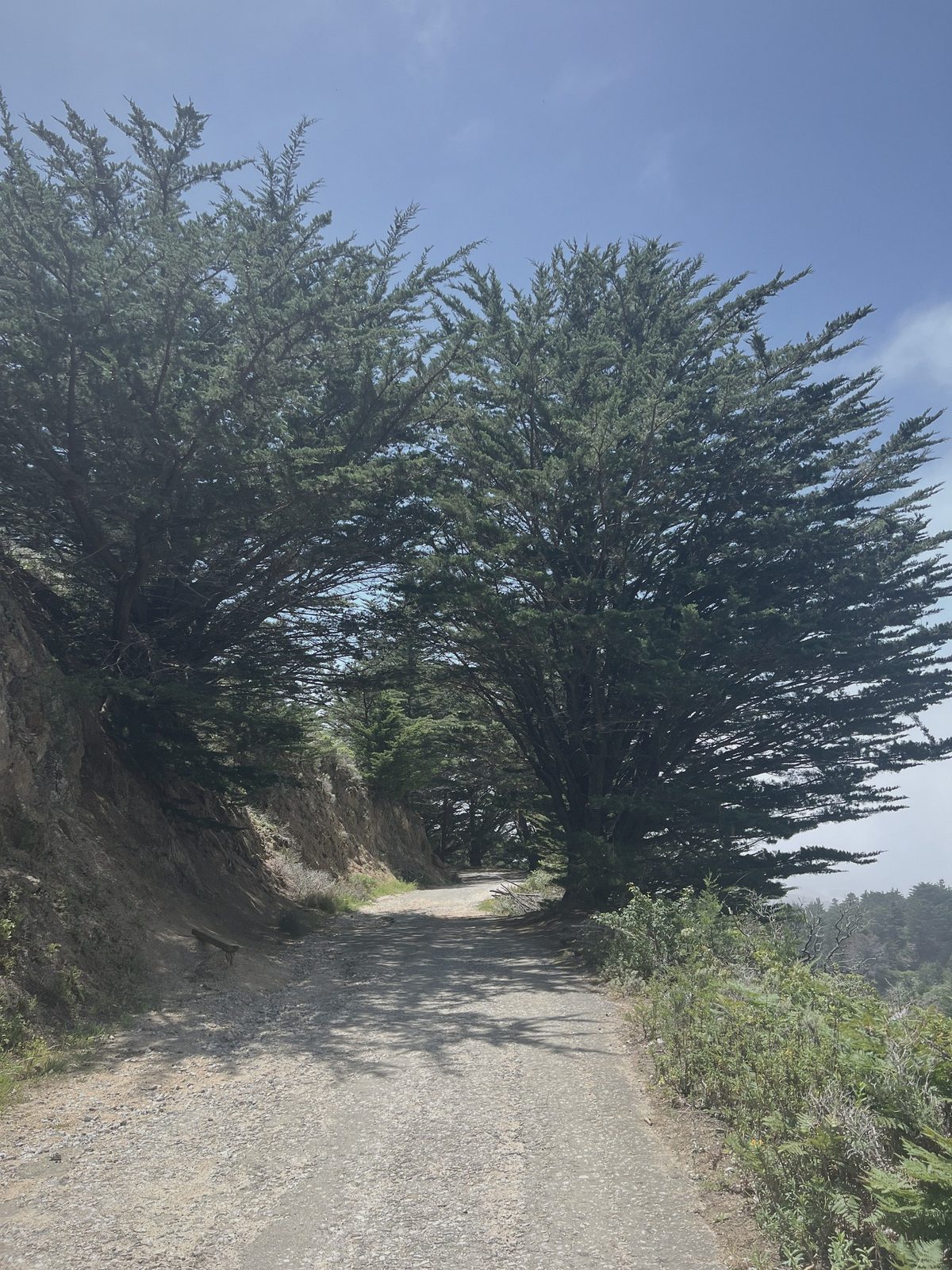
Station 1 · Mori PointHosts the Signs Framework · produces the reading postureThe Pacific coast — storm light over Pacifica
Signs Framework
Producesthe reading postureGroundten living signs
Origin: TDcatalyst, anchored in Aramai Ohlone cosmology and the historical ecology of the Pacifica coast and the Skyline ridge.
The Signs Framework directs executive attention to ten living features of two landscapes that have been read continuously for thousands of years. It does not predict what the executive will see on the day of the walk. That is the point: it activates live reading rather than model application, the cognitive capacity AI workforce transformation requires.
InspirationEvery line carries equal weight.
Radical honestyThe noise drops. The form surfaces.
ConvictionOne summit, one route.
The adaptability question
When did you last gain altitude on your own operation?
Anchored inEagle’s role in Aramai cosmology: elevated perspective, authority.
Five of ten signs shown.
Signs without Teece is an interesting observation that fails to produce action.
02
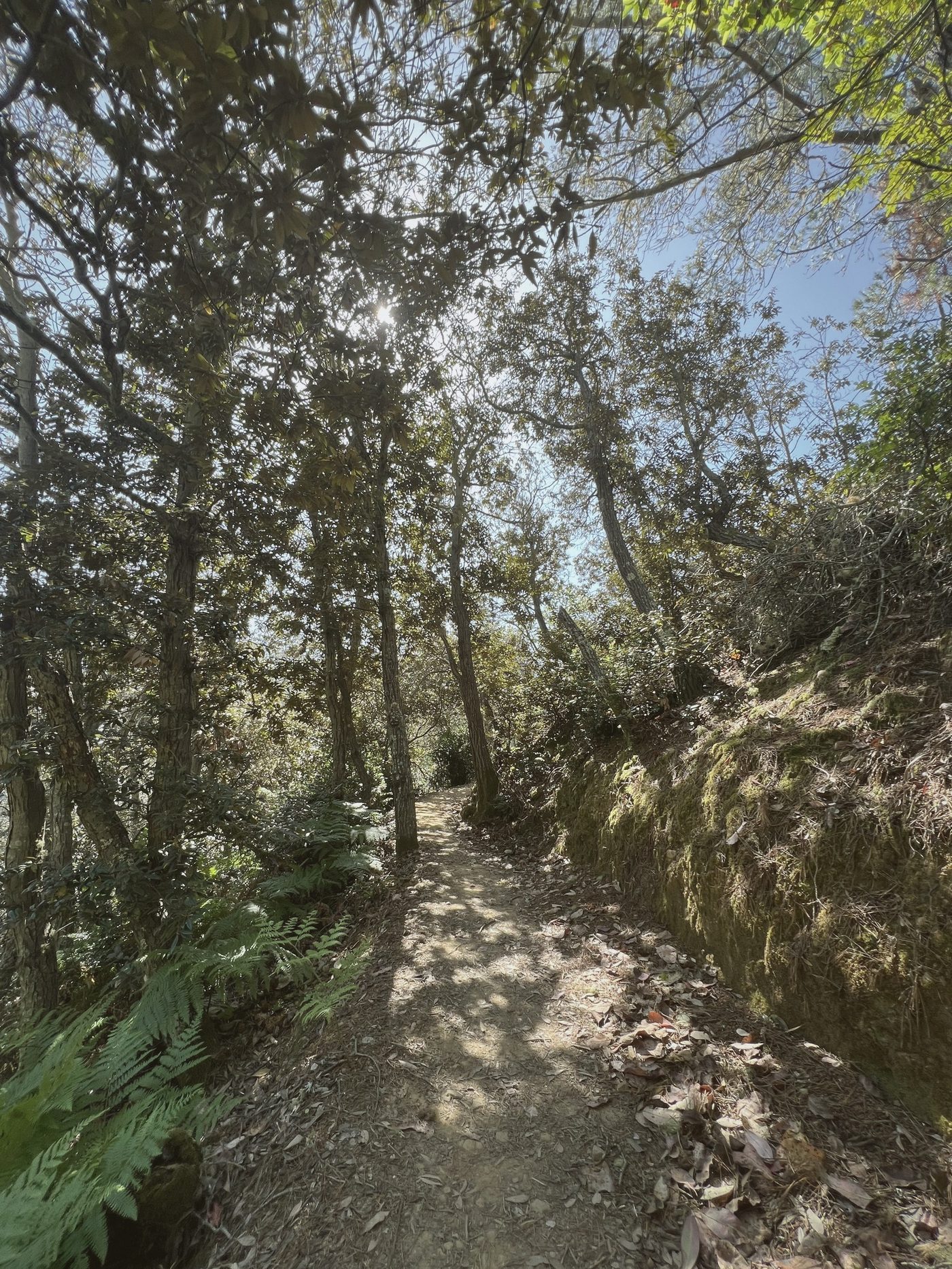
Station 2 · San Pedro Valley ParkHosts Dynamic Capabilities and Organizational AmbidexteritySan Pedro Valley County Park — under the canopy
Dynamic Capabilities
Producesdiagnosis to commitmentOriginTeece
Three capabilities, each doing different work. AI transformation fails most often at the third muscle: organizations that sense and seize without transforming end up with pilots that never make it into operating rhythm.
01 Sensing
Detects risks and opportunities before competitors.
02 Seizing
Commits resources to act on the signal once detected.
03 Transforming
Reconfigures the organization’s resources and structures to deliver on what was seized.
Inside the Catalyst Method, every sign observed during a field engagement receives a Teece cycle. The framework moves the executive from observation to commitment, with rigor a board will recognize.
Worked example, from a real engagement
A hawk works thermals above the coast. The sign surfaces the question: when did you last gain altitude on your own operation?
01 Sensing
No full day away from operational meetings in six months. Altitude already lost.
02 Seizing
A monthly day blocked for ridge-scale thinking. A quarterly off-site built on signal-reading, not planning.
03 Transforming
The calendar, the team structure, and the performance metrics that make altitude a first-class activity rather than a stolen one.
The core tension. Exploitation runs the current business model with discipline; exploration reads signals and experiments. Doing both at once is rare because it is structurally difficult: the two modes require different cultures, metrics, leadership styles, and risk postures.
In an engagement, the executive places their current organization on the matrix. The placement is rarely flattering: most mid-to-large enterprises sit firmly in the Exploitative quadrant and have been rewarded for being there. The gap to the Ambidextrous quadrant becomes the strategic agenda.
Exploration high · Exploitation lowExplorative
Reads signals well, struggles to monetize. Burns cash faster than it learns.
Exploration high · Exploitation highAmbidextrous
The posture AI workforce transformation requires. Rare. Demands structural design, not willpower.
Exploration low · Exploitation lowStagnant
Existential risk. Neither running the business well nor reading what is coming.
Exploration low · Exploitation highExploitative
The default of most mature enterprises. Executes the current model well. Blind to paradigm shift.
The diagnostic does not resolve the gap in a single day. It names it precisely.
04
Station 3 · San Pedro Headlands · Devil’s SlideHosts the Sensing and Responding LoopReal ground — the coastal trail
Four phases that turn signal into practice. Without the fourth, every response is a one-off; with it, the organization compounds adaptive capacity over time. Inside a Catalyst Immersive engagement, the loop becomes a concrete organizational design question: who reads weak signals and how their time is protected, what the escalation path is, who decides whether a response is warranted and at what cost threshold.
01 Detection
Information about the operating environment flows in through deliberate channels.
02 Activation
A detected signal triggers a response process via decision rights and escalation paths.
03 Response
The organization acts: investment, repositioning, experiment, or explicit non-response.
04 Learning
The response is evaluated. Insight is captured and built into updated practice. Feeds back to Detection.
The first three frameworks produce a single executive’s insight. The loop produces an organizational capability.
05
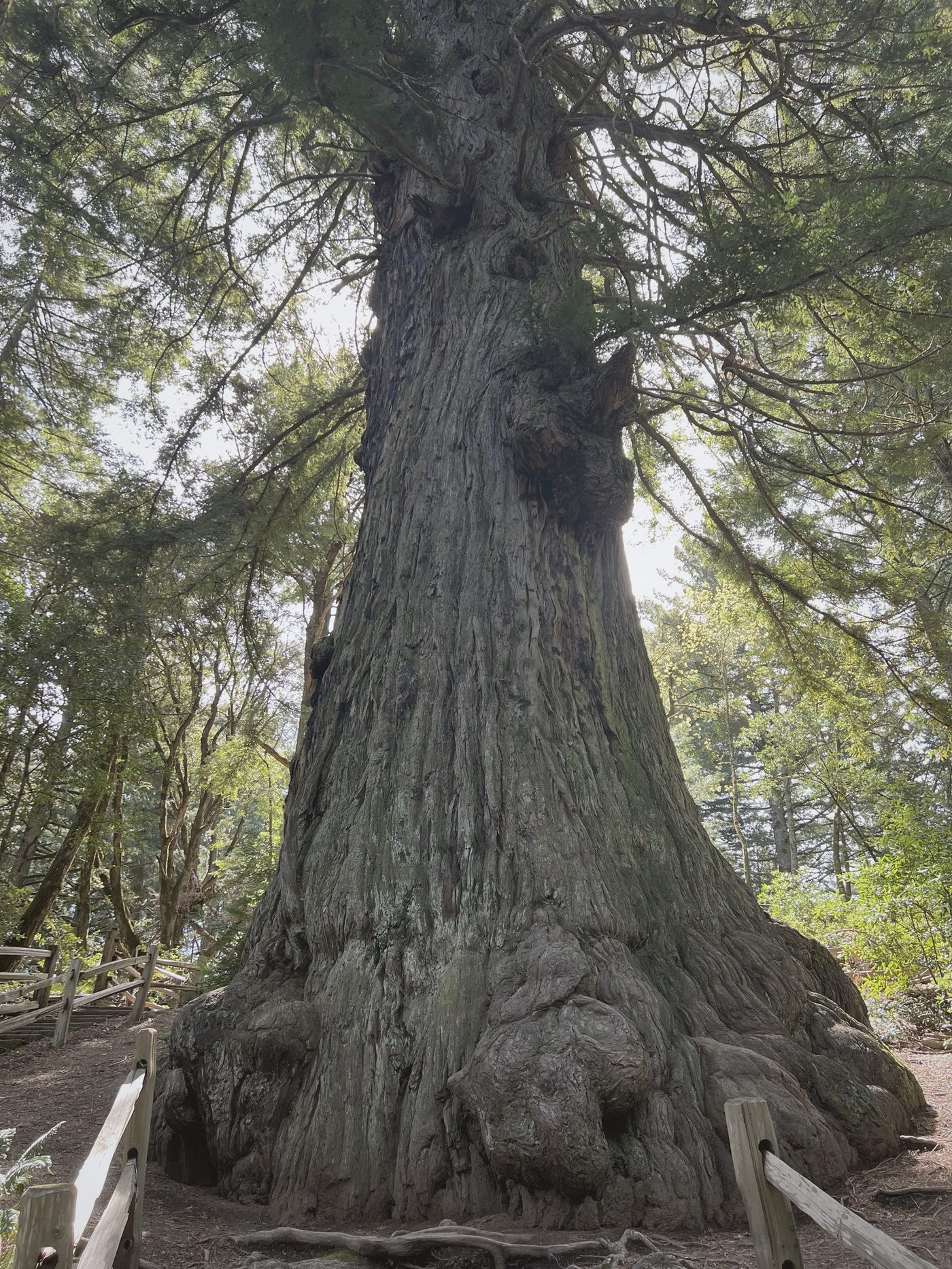
Station 4 · The Methuselah groveHosts the Methuselah Principle · produces the long-horizon reframeThe Methuselah grove — Skyline ridge
The Methuselah Principle
Producesthe long-horizon reframeGroundthe redwood grove
Origin: Named for the roughly 1,800-year-old redwood on Skyline Boulevard, spared by 19th-century loggers because its burls and knobs made the timber commercially unworkable.
The principle. Features that disqualify an organization from one economic regime are often the features that carry it through to the next. Every executive leading AI transformation is being told to smooth out exactly the kind of characteristic that may be the thing the organization most needs to protect.
This framework comes at the end of every full-day or Immersive engagement. Standing at the base of the tree, every decision made during the day is reframed against an epochal time scale. The other frameworks move fast. The redwood slows everything down to the time scale that AI transformation actually operates on.
Which of today’s decisions will look obviously wrong in twenty years. Which features the organization is being told to smooth out may be the ones that carry it through.
Why the sequence matters
Five frameworks. One sequence.
Each framework does work the others cannot. They form a sequence rather than a pile: running them out of order produces weaker output, and skipping any of them produces a partial diagnosis.
Signs without Teecean interesting observation that fails to produce action
Teece without Signsabstract consulting language that does not engage executive cognition
Ambidexterity without the loopdiagnosis without prescription
The loop without Methuselahoperational thinking without the long horizon the AI transition requires
SourcesThe research behind the claims.
David Teece. Explicating Dynamic Capabilities: The Nature and Microfoundations of Sustainable Enterprise Performance (2007). UC Berkeley Haas School of Business.
Charles O’Reilly and Michael Tushman. Lead and Disrupt: How to Solve the Innovator’s Dilemma (2016). Stanford Graduate School of Business and Harvard Business School.
Kevin Burnard and Ran Bhamra. Organisational Resilience: Development of a Conceptual Framework for Organisational Responses (2011). International Journal of Production Research.
Olivier Hamant. The Benefits of Imperfection (2024). Plant biology, robustness, suboptimality.
Randall Milliken et al. Ohlone/Costanoan Indians of the San Francisco Peninsula and Their Neighbors (2009).
Association of Ramaytush Ohlone. ramaytush.org. Living community. Yunakin Land Tax.
National Park Service and Golden Gate National Recreation Area. Timigtac Trail, Lishumsha Trail, Mori Point site documentation.
Peninsula Open Space Trust. Methuselah redwood documentation.
The method is the shape of the work. The engagements are where it gets applied.